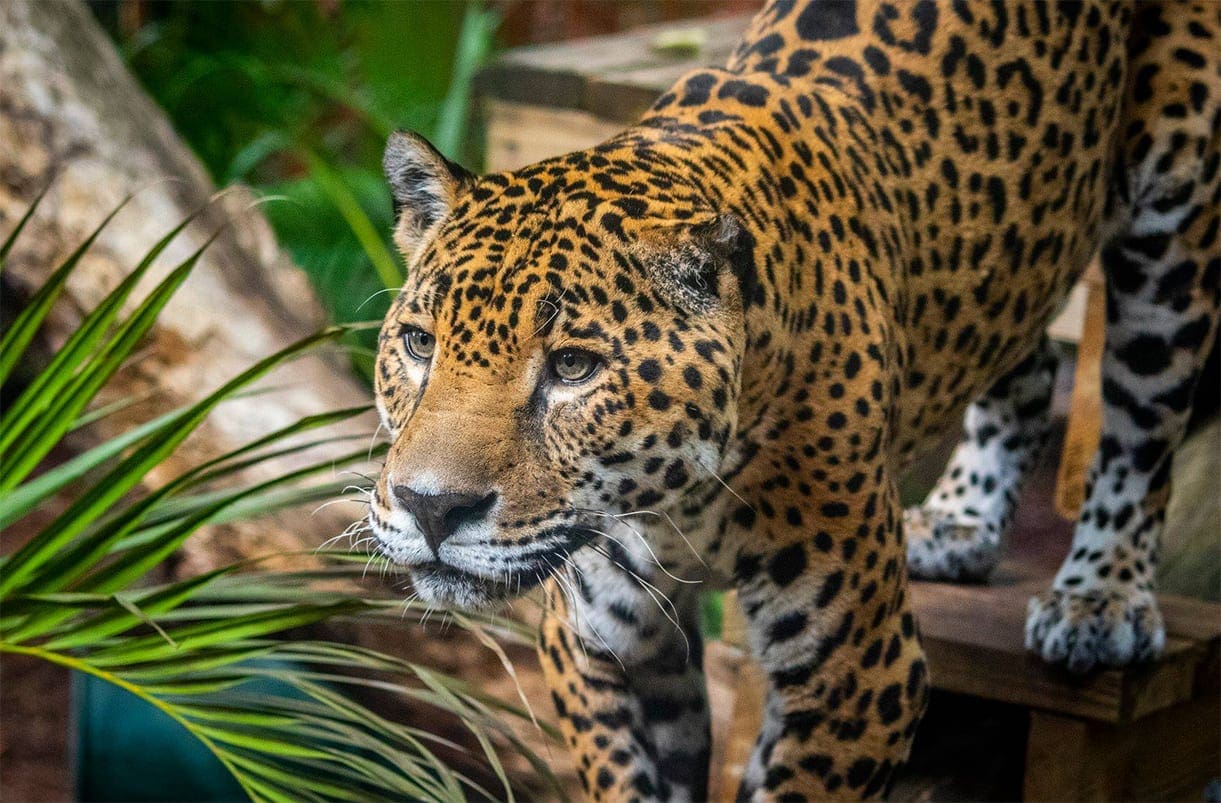
Jaguar

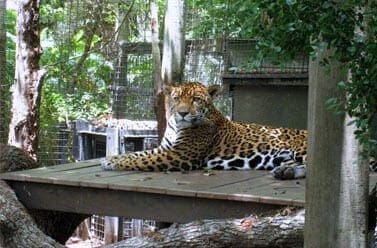
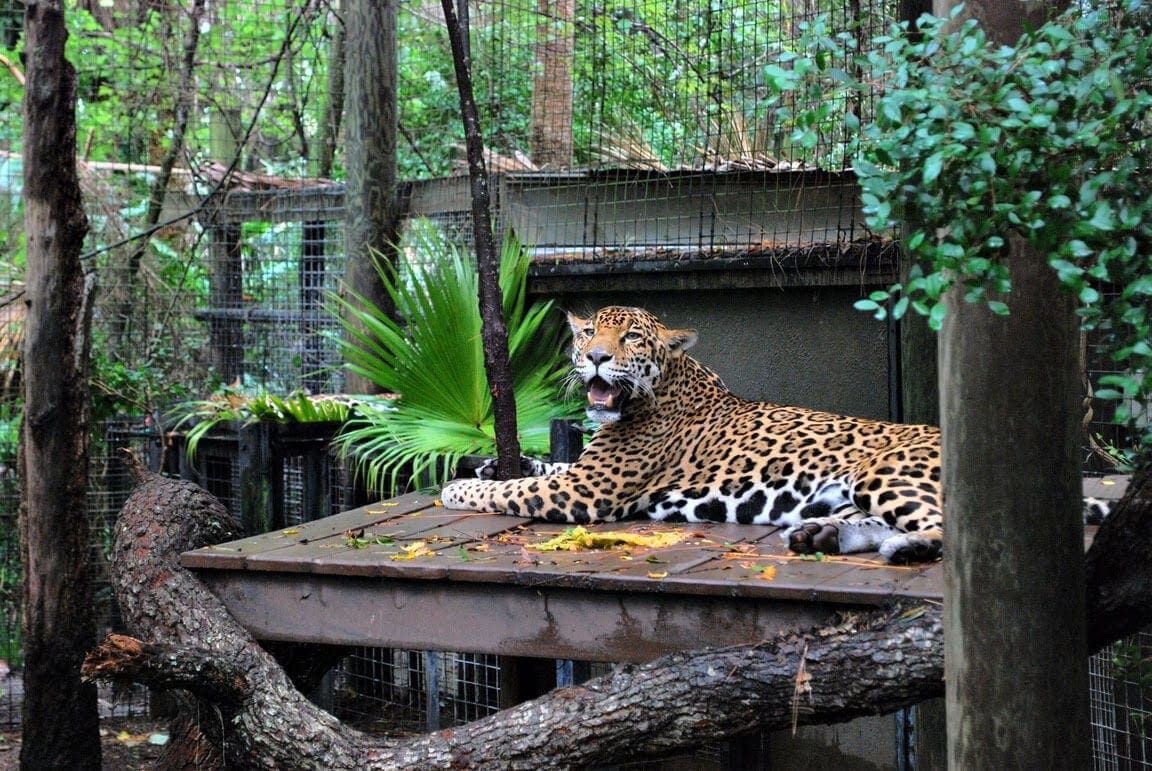
The Jaguar (Panthera onca) is a New World mammal of the Felidae family and one of four "big cats" in the Panthera genus, along with the tiger, lion, and leopard of the Old World. It is the only Panthera found in the New World. The jaguar is the third-largest feline after the tiger and the lion, and on average the largest and most powerful feline in the Western Hemisphere. The jaguars present range extends from Mexico across much of Central America and south to Paraguay and northern Argentina. Other than occasional visits from wandering jaguars from Mexico, the cat has largely been extirpated from the United States since the early 1970s.


Jaguar


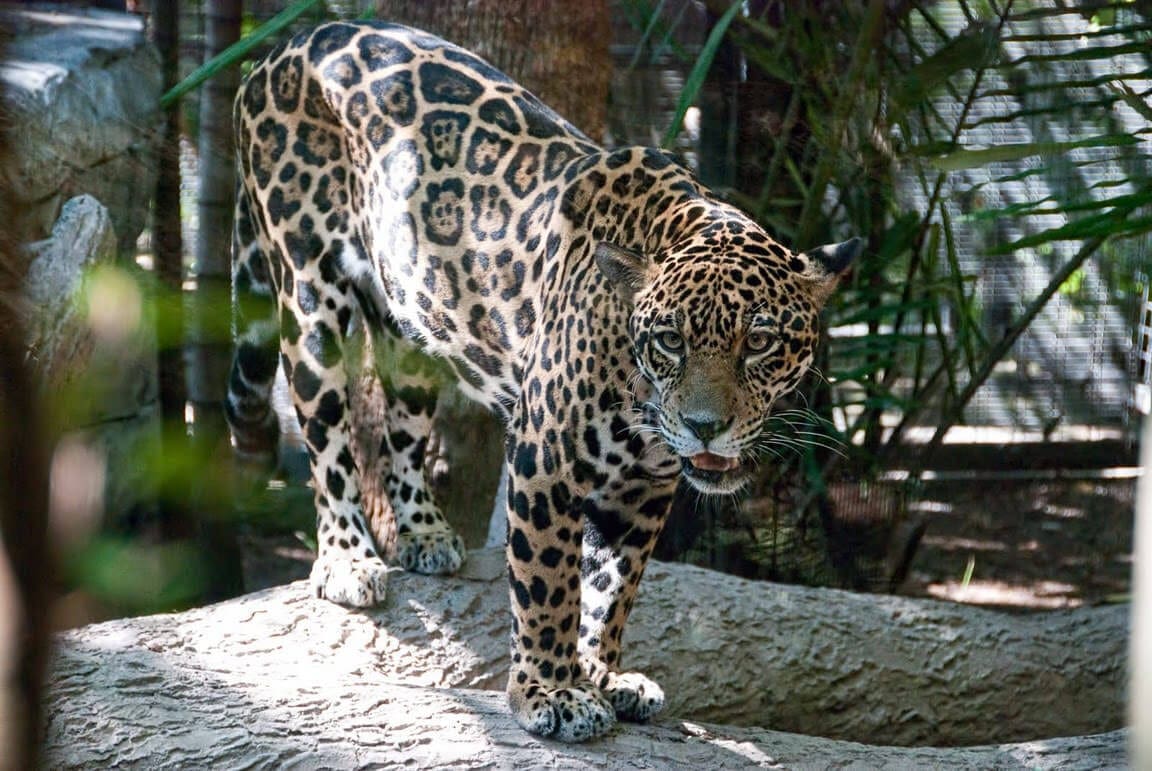
This spotted cat most closely resembles the leopard physically, although it is usually larger and of sturdier build and its behavioural and habitat characteristics are closer to those of the tiger. While dense rainforest is its preferred habitat, the jaguar will range across a variety of forested and open terrain. It is strongly associated with the presence of water and is notable, along with the tiger, as a feline that enjoys swimming. The jaguar is a largely solitary, stalk-and-ambush predator, and is opportunistic in prey selection. It is also an apex and keystone predator, playing an important role in stabilizing ecosystems and regulating the populations of prey species. The jaguar has developed an exceptionally powerful bite, even relative to the other big cats. This allows it to pierce the shells of armoured reptiles and to employ an unusual killing method: it bites directly through the skull of prey between the ears to deliver a fatal blow to the brain.

The jaguar is a near threatened species and its numbers are declining. Threats include habitat loss and fragmentation. While international trade in jaguars or their parts is prohibited, the cat is still regularly killed by humans, particularly in conflicts with ranchers and farmers in South America. Although reduced, its range remains large; given its historical distribution, the jaguar has featured prominently in the mythology of numerous indigenous American cultures, including that of the Maya and Aztec.

The word jaguar is pronounced "ˈdʒæɡwɑr", "ˈdʒæɡjuːɑr", or?especially in British English?"ˈdʒæɡjuːər". It comes to English from one of the Tupi-Guarani languages, presumably the Amazonian trade language Tupinambá, via Portuguese jaguar. The Tupian word, yaguara "beast", sometimes translated as "dog", is used for any carnivorous mammal; the specific word for jaguar was yaguareté, with the suffix -eté meaning "real" or "true".

The jaguar, Panthera onca, is the only extant New World member of the Panthera genus. DNA evidence shows that the lion, tiger, leopard, jaguar, snow leopard, and clouded leopard share a common ancestor and that this group is between six and ten million years old; the fossil record points to the emergence of Panthera just two to 3.8 million years ago. Phylogenetic studies generally have shown that the clouded leopard (Neofelis nebulosa) is basal to this group. The position of the remaining species varies between studies and is effectively unresolved. Many studies place the snow leopard within the genus Panthera but there is no consensus whether the scientific name of the snow leopard should remain Uncia uncia or be moved to Panthera uncia.

Based on morphological evidence, British zoologist Reginald Pocock concluded that the jaguar is most closely related to the leopard. However, DNA evidence is inconclusive and the position of the jaguar relative to the other species varies between studies. Fossils of extinct Panthera species, such as the European jaguar (Panthera gombaszoegensis) and the American lion (Panthera atrox), show characteristics of both the lion and the jaguar. Analysis of jaguar mitochondrial DNA has dated the species lineage to between 280,000 and 510,000 years ago, later than suggested by fossil records.

The Brevard Zoo is on Facebook! The Brevard Zoo is on Twitter!
Association of Zoos and Aquariums
Call us @ 321.254.9453! Brevard Zoo is located at 8225 North Wickham Road, Melbourne, FL 32940
© 2011 Brevard Zoo. All rights reserved | View Terms | FAQs | Contact Us