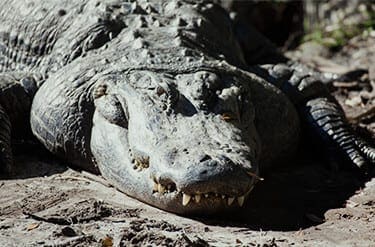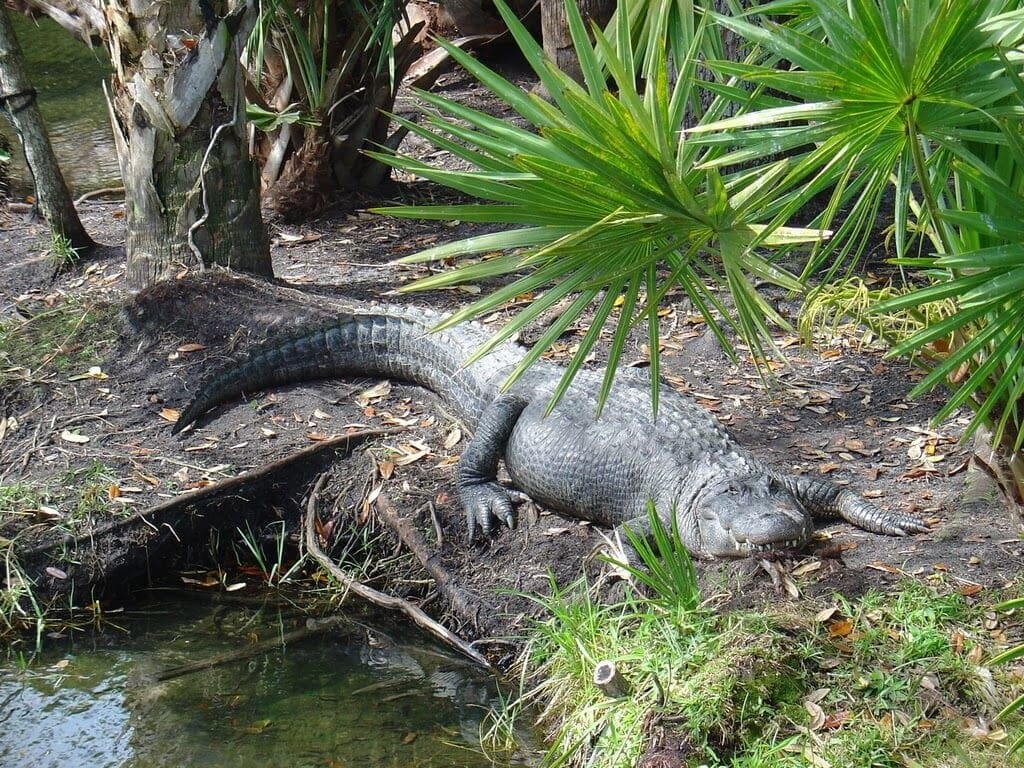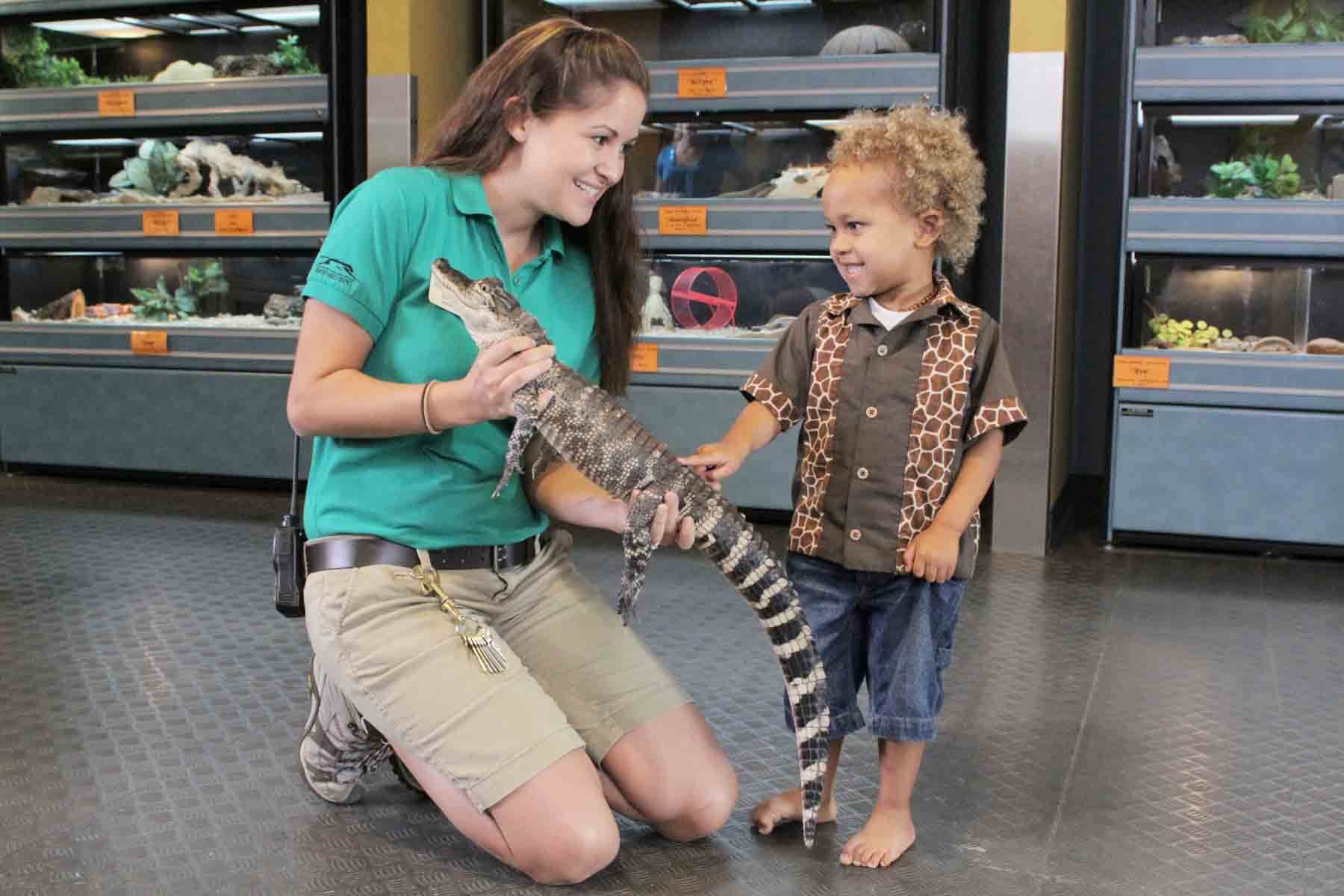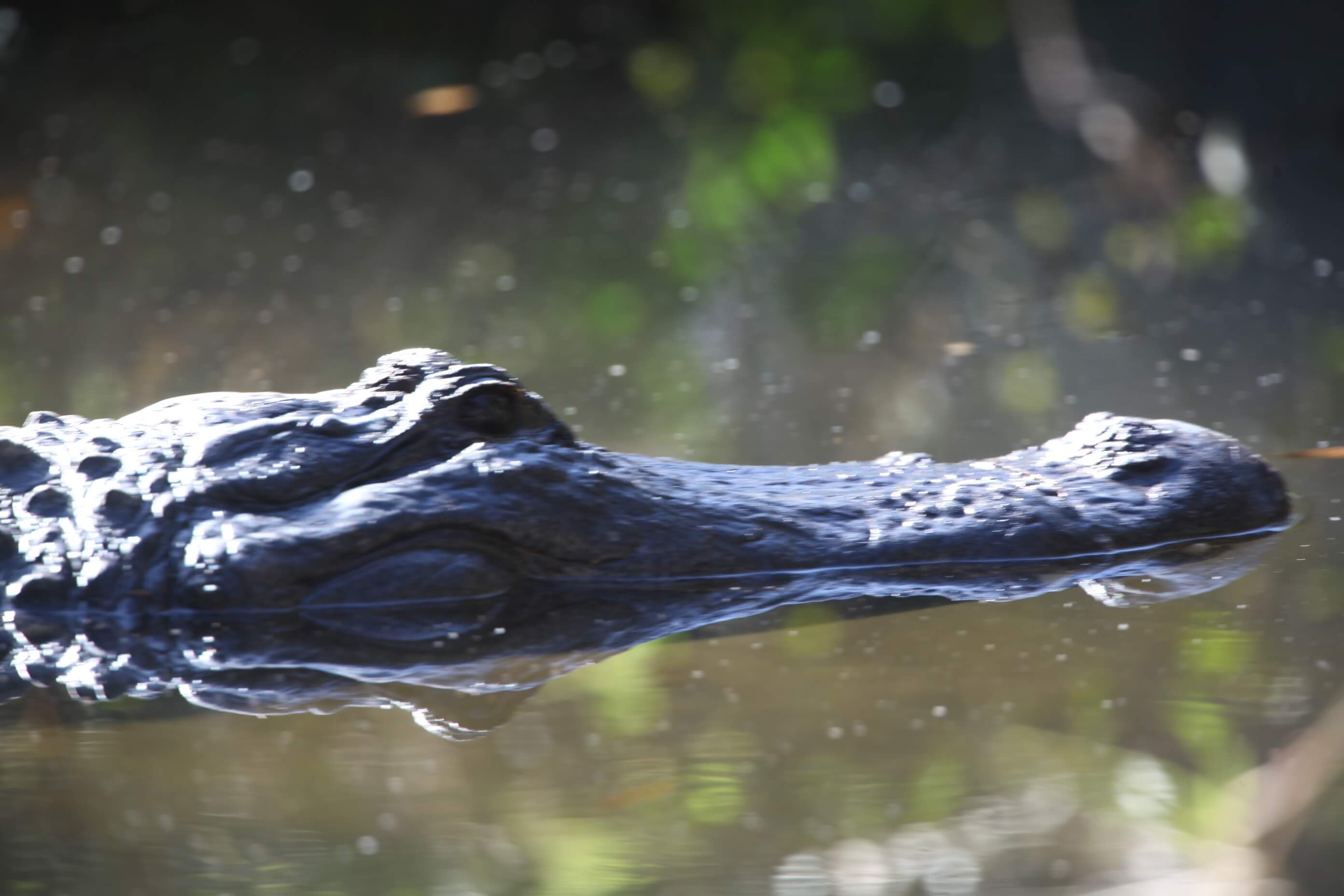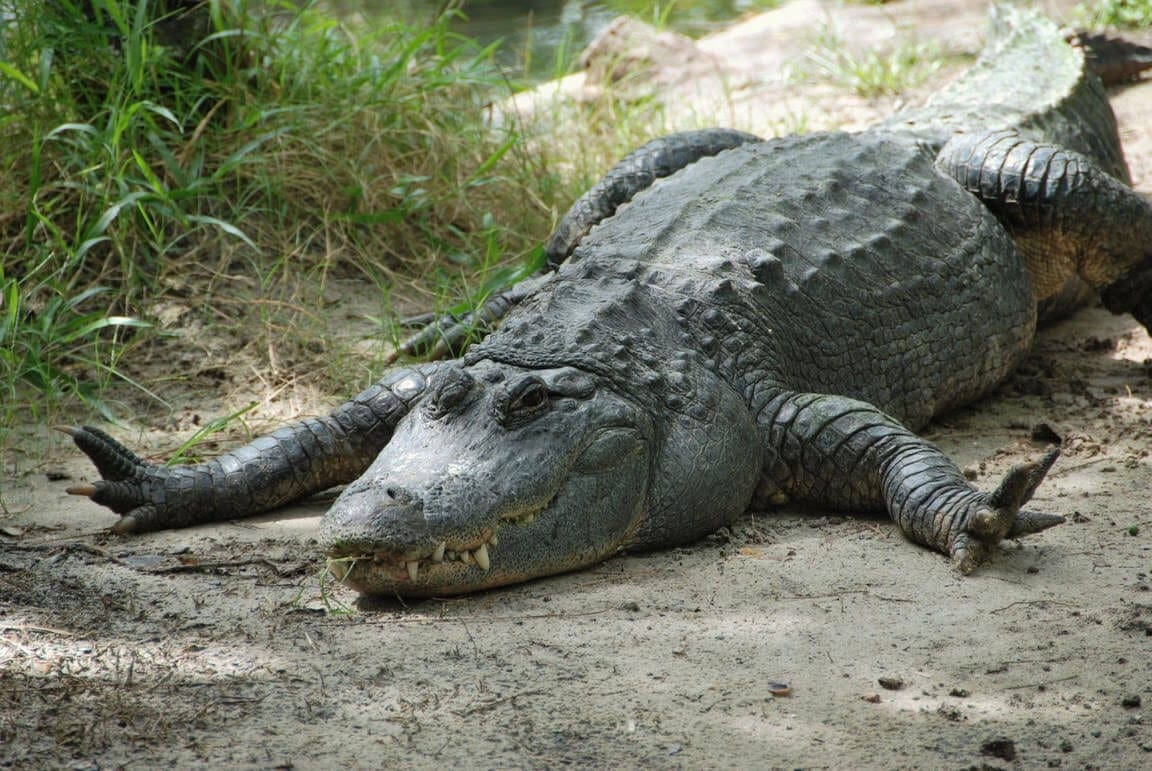
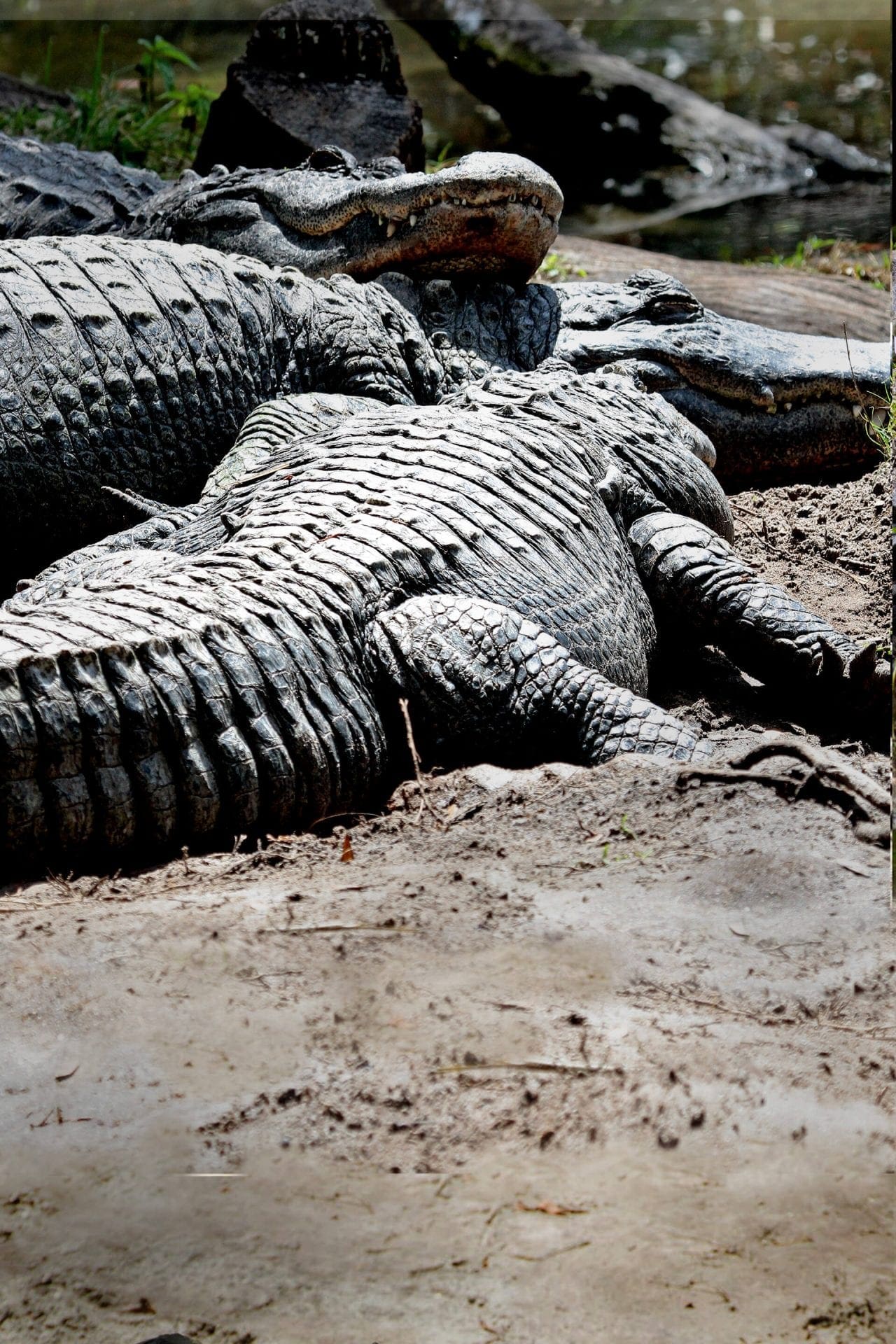
Is that a log or an alligator? The American alligator has great camouflage. They have an “armored” skin with a muscular flat tail. With upward facing nostrils at the end of their snout, they can breathe while the rest of their body is underwater.

ORIGIN:
Southeastern United States

HABITAT:
Swamps, marshes, lakes, and slow-moving rivers

HEIGHT/WEIGHT:
50-1,000 lbs
Length: Up to 19 ft

DIET:
Fish, turtles, mammals, rats, chickens and birds

PREDATORS:
Humans, other alligators

NATURAL DEFENSES:
Can swim up to 20 mph and run up to 11 mph; bumpy skin provides camouflage

REPRODUCTION:
Lay 20-50 eggs; 65-day incubation

THREATS:
Human-populated areas; increased toxins in water

LIFE EXPECTANCY:
Up to 50 yrs in wild
1 ft |
6 in |
10 in | 2 in |